Friday, April 17, 2009

And One More Thing....

To the right is a screenshot of Perez Hilton's website. I was just on it a second ago, and I was inspired to write one final thing. (not an eloquent thing, just a thought).

Epic taught us that google was going to take over the world. That could very well be true, but the day I'll actually be scared of the New Media is when google and Wal-Mart merge, and then Perez Hilton signs on/ is employed by them.


This is definitely not the most logical thing I've ever written, but the thought just crossed my mind as I saw Perez was on twitter, and wanted you to follow him (that's his twitter on the right).

Google+Wal*Mart+Perez Hilton = the real dumbing down of society. I think until that happens I pledge, right now, to fully embrace the New Media.


In fact, in spite of all of my complaints in class about Twitter yesterday, I really like the New Media. Just not all at once, all at the same time.

I still don't like Wal*Mart (pictured on the right), but that's a different story.

Okay, that's it for now—Stephanie


Images:
perezhilton.com screenshot
twitter.com/perezhilton screenshot
Wal*Mart photo via http://plainview.files.wordpress.com/2009/02/walmart1.jpg

Thursday, April 16, 2009

What if Jack Kerouac Twittered "On the Road"

As I was trying to think of what to say for this post, that was the first thing that popped into my mind. What if "On the Road" was composed via 140 character twitter rather than a giant scroll that was supposedly written in a stream of conscious-like state? Can you imagine it? (Jack Keroauc

JackKerouac@twitter.com: Just started my journey across America y'all. I got a nice truck driver to pick me up

11:27am

JackKerouac@twitter.com: Eating pie and drinking coffee. Got 2 go.

2:23pm

JackKerouac@twitter.com: Met some new friends who share my values, it was meaningful y'all. Gonna drink and talk with with them l8r.

7:47pm

The New York Times article Finding Utility in the World of Twitter talks about how valuable the social networking tool to be. Apparently it's good for citizen journalism, advertisement, and in the future has potential for social science research. My friends are all using it. My friend Taylor even says it has replaced facebook for her. Lauren, my housemate has a different take on twitter stating, "I only twitter when I drink". Either way the website is taking over, more new media than facebook or blogging. I mean, you can't get more participatory and interactive than instant, mobile posting. Plus, it encourages generating content that is even more concise and off the cusp than blogging. (On the right, Lauren's twitter account).

What does this all mean for New Media users in general, and me in particular?

Using and analyzing the New Media has changed the way that I conceptualize my own writing. Blogging in particular has made me question the conventions of my own writing. I used to keep a journal that was both a private diary and the rough drafts of all of my papers. This used to work for me as a place to get my thoughts out before I would compose my thoughts on the computer. I've been so busy that that has really fallen by the wayside, and sometimes I wonder if I should just be blogging my thoughts instead. That wouldn't necessarily save time, but it would be easier to copy/paste things into papers. Or maybe I could have a twitter where I just kept all of my good theses statemenets and one-liners. I'm saying these things half in jest and half seriously. In a way, I'm old school enough to think this is ridiculous, but I can recognize that it could certainly have its utility. In fact, someone ten years younger than me may use these things exclusively without a second thought. Journals, what are those?

I also think my increased use of the New Media has heightened my awareness of the effectiveness of visual argument. If you scroll down and look at my old posts, I hardly used pictures. Now I try to use at least three, because being verbose and text heavy just does not fly on the internet. I'm not sure what this means for society at large, other than that people may rely more heavily on graphic novels to convey messages (a good thing, in my book). I think design will have to be considered on websites and in print more, as a means of conveying message and appealing to the audience more. As my roommate Matt always says, "No one knows why design is good, but everyone can tell you when it's bad".

For me, that concept of design, art and image playing into text and writing is exciting. I like the concept of using dynamic graphs and good visuals as a means of conveying a message more clearly. I also thinks it makes things significantly more complex. Now that I know how much I need good design, I find myself scrambling to connect with computer science and art students to help make the Roosevelt Institution's and HRTE's websites look sharp. No more simple html coding, I need flash! On the other hand, it's frustrating because the more I know, the more I realize that I don't have the skills to carry out my vision.

I think though, that this may be a problem that plagues our generation but will be solved by the next. Maybe kids that are in kindergarten now will learn basic coding and flash (or whatever newer, better program there is) as part of a basic education. At least, I would recommend that be a change to current educational policy. I think that people will also use more concise, simple arguments to convey meaning effectively, and that they have to do this more often. Like I've said before, I usually will download the 50 page report only after I've been convinced by the 5 eloquent bullet points.

I don't think this means that people are becoming dumber. Rather, I think that we're approaching a point where society is becoming more raw, off the cusp, and therefore more informal, which means that the old conventions are being thrown away in favor of more minimalist text policies. (I think Delia brought this up in class once before). I think it's especially hard to admit this in an academic setting, where 3,000 words is praised and 600 is not considered to be worth anyone's time. Yet, to the public at large, the trend is towards less. Basically, what I'm saying, is that when we leave school, we'll have to be retaught everything we know.


Which leads me to my final thoughts on the New Media, as I've been breaking my learned blogging rules by being close to 1,000 words AND being too verbose. I think what I've learned about myself as a writer is that I'm kind of old school. I appreciate the New Media. I understand the utility of blogging and the effectiveness of twitter and yet, I don't really know if it's that great. I know from experience that not thinking before speaking has gotten me in trouble, and in a way, blogging, and more so twitter, and the writing versions of that. Composing without thinking seems to me to have the potential to generate brilliance and word vomit at the same time. Unfortunately I think it's more the latter than the former.

I think being participatory is generally better, but I'm not sure it's so great that using these technologies without reserve is necessarily helpful to society. Likewise, I think facebook is great for keeping up with old friends, but I wish people wrote letters more (if you forgot what they are, there's one above). Today, letters seem like a special anacronysm reserved for special occasions. They used to be New Media, but now I treasure and save them. I guess what I'm getting at is that all of these technologies have their pros and cons. Not the same as the Economist article, but rather a complicated mess that may be just the deficiency of growing up now as opposed to later. We're living in the transition between technologies. We're still figuring out how to stay in touch without seeing/hearing someone. How to speak our minds without being crass or irrelevant. I know I haven't caught on yet, but I better try to catch up, because the New Media is here to stay— Stephanie


Images:

Jack Kerouac: http://www.abebooks.com/blog/wp-content/uploads/2009/02/jack-kerouac.jpg
Letter: http://chass.colostate-pueblo.edu/history/seminar/lynch/letter.jpg
Twitter: screenshot, personal

Tuesday, April 7, 2009

Manovich and the Barbarians

To the right is an image of the show Mad Men. Mad Men is centered around an advertising agency called Sterling Cooper that is finding its way in the early 60s. This era is sometimes referred to as the "Golden Age of Advertisement" because individuals working in the field were still trying to find their way between print ads, radio ads, and the introduction of television. In thinking about interactive advertisements, and the information provided by the Barbarian group, I can't help but think we're in a similar era. Advertising on the internet is becoming more and more popular, and different groups are trying to find the most creative and compelling ways to do so. On the other hand, I think Manovich in The Myth of Interactivity does a good job of laying out the increasing interactivity in media, and its evolution before the internet. So, while the new media is utilizing this form of interaction more, I think it's relevant to connect it back, and look at how interactivity has affected us before...


I can't read about these interactive advertisements, and the general advent of interactivity on the web, without thinking of R.L. Stine. Everyone remembers him, right? In elementary school I read two or three books every week. This meant I didn't have any friends, but I did become exposed to every genre of books. I read classics and Animorphs on the same day with abandon. I even got into Goosebumps (pictured on the right). What was interesting about these books, was some of them had alternate endings that the reader could choose. Because I was a nerd, I would read all of the endings, but the idea was that the reader had a choice in the matter, just like in the "Waking up Hannah" video. This connects to the Manovich article The Myth of Interactivity: interactivity has not been invented by the web, but rather has been broadened and become more normalized.


I think the Barbarian Group does a good job of articulating the pros of using interactive advertisement, and distinguishing between what they do and other forms of web advertising. (That's the Subservient chicken advertisement, pictured on the right). Still, I'm not sure I'm buying the effectiveness of interactive advertisement. I would hands down agree that it is more entertaining than other forms of advertisement out there on the web, but it's also more time consuming. Had I not been compelled to watch "Waking up Hannah" for class I would have never chosen to do so. Same goes for the Subservient Chicken. I agree that they're really interesting and unique from other advertisements, but the interactivity takes time, and I know that they're ultimately trying to sell me something, so the whole thing feels cheap.

Maybe this is the wrong attitude to have towards interactive ads on the web, but I'm skeptical of their overall effectiveness. Thinking something is entertaining doesn't mean that I'm going to spend hours looking at it. In fact, I'd like to know exactly how long the audience is supposed to interact, on average. I think that could be extremely relevant to the effectiveness of a campaign.


Plus, these ads are only interactive to a point. I'm not interacting with a human (as Barbarian points out), but rather, I'm interacting with a limited media presence, meant to generate different results as I enter different inputs. This also makes it feel cheap, or maybe not cheap, but I'm not sure I'm willing to put in the effort to interact. That's just my skepticism though, obviously Barbarian is doing something right, and the ads are cool. I just wonder if a flash page is in some ways more effective? What do you think? Place your thoughts below...

Images:
Mad Men: http://blog.ragan.com/prjunkie/mad_men.jpg
Subservient Chicken: http://img18.photobucket.com/albums/v53/ldma666/subservientchicken.jpg
Goosebumps: http://blogs.amctv.com/monsterfest/goosebumps.jpg
Waking up Hannah: http://www.culture-buzz.com/IMG/jpg/Waking_up_Hannah_image_1.jpg

Monday, April 6, 2009

Blogging, and Conferences on Blogging

The Roosevelt Institution is a student think tank
that has chapters all across the country. As a think tank we research, write, and publish policy
initiatives created by students, as well as putting on programming across campus. Working with Roosevelt, I've had the opportunity to travel around the country, meeting with other chapters and creating a national brand and strategy. In February, I went to a writing conference that was put together by national headquarters. Last weekend, I attended another conference at Michigan State. This is what I learned: Blogging is in, and it's here to stay.

The picture above is a screen shot of the Roosevelt Institution's Health Care blog. This blog was created by Taylor Johnson, the director of the Health Care policy center. Taylor and I both created blogs for our centers after attending the February conference, and talked about them at Michigan State this past weekend. For us, blogging is a way to create discussion between meetings, write out policy ideas, and act as another forum for student publishing.

But, as everyone in SWC 200 knows, maintaining a blog can be challenging, especially in the context of school, jobs, homework and extra curricular activities. This begs the question, how can we make our blogs more effective, generate a large readership, and share the workload?

Personally, my answer to this question is to allow for multiple authors on the blog in order to create variety and interest. Also, Laura McClure, Multimedia Editor of motherjones.com, made these suggestions when speaking at the conference:

10 Secrets Successful Bloggers Know

1) Everyone loves a list

2)Most people also love embedded video, polls, charts, photos, or primary source documents. If you need a blog post idea and are coming up blank, try picking one of these options, adding "of the day," and matching topic to fit.

3)Longer than 600 words is too long. When in doubt, make it two posts.

4) Start with the assumption that all your blog readers have already devoured the NY Times that morning, and probably at least skimmed the Washington Post as well. Use different sources than these. BBC, the Guardian, Foreign Policy, Politico Der Spiegel, Grist, the LA Times, HuffPo, Mental Floss, The New Scientist, BoingBoing, MetaFilter, Neatorama, AndrewSullivan.com, Wonkette, Kevin Drum's MotherJones.com blog, the from page of Digg- these are good starting points; branch out from there.

5) Being timely matters. Want to know what's timely right now? Try searching Twitter (sidenote: I just got a Twitter account so (if you have one too) find me and let's share tweets!)

6) Aim to include at least five links per post. To maximize search engine optimization make your anchor tags proper nouns, catchphrases, and other keywords people might search for in Google.

7) Headlines really matter. Start with a keyword when possible, and make it catchy.

8) Consistently link to the blogs you wish would link to you; also join their comment threads. And don't be afraid to email posts you've written to blogs you like- a little chutzpah goes a long way.

9) If you're funny, be funny. If you're not, be cocktail party conversational. The best bloggers are both.

10) You can write about anything you want, as long as you make it interesting and leave people a small but useful factoid as a party favor.


This list has been good to me when blogging. It reminds me of what's important when generating content, not to become too verbose, and to keep things interesting. I know I don't always do everything perfectly, but I think that even conceptualizing this information is a good start. I think the next challenge is to work on generating more readers (I didn't learn any good tips on that from either conference).

I think the main thing I took away from both experiences is that blogging has become a legitimate means of self publishing and expression. As long as we take our policy blogs seriously, readers will take them seriously too. Personally, I think blogging can be exhausting. BUT, I think that it has become so engrained in youth culture, that to maintain relevancy most organizations will have to take up some form of blogging. Roosevelt is trying, and attempting to learn from the best, I'm just still not sure the best way to maintain momentum.

Images:

Teddy Roosevelt: http://www.be.wednet.edu/OurSchools/hs/staff/jlehman/lehmanweb/images/teddy-roosevelt.jpg

Roosevelt Institution: http://rooseveltinstitution.org/

Thursday, March 26, 2009

Discipline, Punish, and the New Media

This fella on the right is Michel Foucault. He was a prominent French philosopher, famous for writing the "History of Sexuality" and "Discipline and Punish" (among other works). I recently read "Discipline and Punish" in a class I'm taking on the History and Theory of Punishment. While the novel focuses primarily on the prison system, Foucault spends a great deal of time talking about the reorganization of society as a whole—After all, our punishment systems are just a reflection of society at large.

There are two concepts from this that I think could directly be applied to our lives in the New Media. The first is the intensification of the disciplines, and the second is the concept of the Panopticon.

The disciplines involve distribution in space, organization in time, the ability to assemble, and the creation of standards and norms. Foucault attributes their creation to military and monastic organization, but eventually illustrates how they evolved over time to include schools, hospitals, and prisons. Basically, every aspect of society came to be dominated by the disciplines.

This in turn created dossiers of individuals, records of their lives and their standing against the group. Today we call these disciplines GPAs and Driving Records. Or, more broadly, we could include anything that we've ever generated and set out on the web, ever.

Because it's so difficult to delete anything from the ranks of the internets, we are creating larger dossiers that encompass more individual content about ourselves. Content that could be inconsequential, or not. Embarassing, or not. For example, in writing my personal narrative I have been going backwards in time, digging through my livejournal (yup, still have one), facebook, e-mail, and gchats to try and go back to where I was on April 11, 2008. This is great for research, but I'm uncomfortable with it. I hate the idea that my personal life is so easily traced and documented due to my use of the internet, and the dossier of information that has subsequently created.


This brings me to the panoptic principle. Originally, this was an architectural principle, used in the design of prisons. In the center (as seen on the right) sits the guard tower, which would be able to watch over the individual cells, forcing people to correct their behavior. Foucault takes this principle further, arguing that whether or not the tower is occupied does not matter, for people will self correct based on the notion that they are being watched.


This directly applies to the New Media. Creating content for a blog, livejournal, myspace, or facebook page presupposes an audience. Otherwise, it would not be logical to create content online. This audience then forces you to anticipate reaction, which causes you to modify your behavior. Maybe this isn't true for everyone, but it's certainly true for me (that's a screenshot of my lj, btw). What I write in my real journal is very different than anything I would publish on my livejournal, just as my personal photographs are different from the photos I allow to be posted on facebook. I am constantly grooming myself in anticipation of an audience, whether anyone reads what I write or not.

Of course, one can argue that there are people who don't care what others think, and I would agree that they exist. BUT, I would argue that they're the type of person unlikely to being using these social networking tools, because if they didn't care, then why would they have any of it?

As for myself, whether I like it or not, I'm consumed by these disciplines and the panoptic principle.

As for Mr. Foucault, well, I think that if he had lived past 1984, he would agree with me that the discplines have expanded with the advent of the internet and social technology. Of course, he would have said these things in a much more articulate fashion.

Images:
Michel Foucault: http://perroscallejeros.files.wordpress.com/2007/06/michel_foucault.jpg
Panopticon: http://www.uncarved.org/blog/wp-content/uploads/2008/08/panopticon.gif
Livejournal: Screenshot of my livejournal, taken by myself

Friday, March 20, 2009

Does distance make it Personal?

To the right is a screenshot from the blog "F My Life". People post the situations that make them hate their life. Or just really awkward situations ( I mean really, what's the difference?). The posts are short, and people can vote whether or not the person deserved it. I've become addicted to reading this site. It's nice to know that there are people out there that are as awkward as I am...

The process of writing a personal narrative for this class hasn't been exactly easy for me. I chose to write about an experience that I never share with anyone. Even my roommate, whom I've known since I was 5, doesn't know about my foray into the Craigslist personals.

When I think about why I don't share this story often I usually can't come up with a good reason, other than it reminds me of a very specific time in my life, a time that needs context and set up, and feels very in the past from where I am today. But, I was compelled to blog about it here, because, in doing this project I have taken up reading Craigslist again.

Today, while working on my second draft I came across this on the "Missed Connections" page:

(This is a picture of a Post Secret postcard)

Several months ago we had sex a few times and although you used a condom you must have torn it when you put it on because a few weeks after I learned that I was pregnant and yes it was your baby because as you and I both talked about I hadn't had sex with anyone since 13 months before you. Unfortunetly I miscarried our child. I wasn't going to tell you about the pregnancy or the miscarriage due to your religious beliefs and how your family would react and disown you, but I can't hold it in my heart anymore. Even though our baby is gone we both need to come to terms that this baby was your first and even though he/she died, the baby was a creation of both of us and deserves acknowledgment. I won't tell you my name, just know that i'm someone that truely enjoyed our times together as did you and next time you have sex PLEASE make sure the condom isn't torn. As you said your parents would flip if they found out you were having sex before marriage and had an outside child.....Your name starts with an H....i'm not from ann arbor but you are.

Wow. What a loaded post. After I finished reading it, it made me wonder about the circumstances of her situation. Why didn't she call him? Did she not have his phone number? I wondered if they had met on the Casual Encounters section. Was she doing this because she knows he reads this page? Or was this more meant to make her feel better about the situation?


(This is a screenshot of the Craigslist Missed Connections)

I would agree with most people when they say
that technology has changed, and in some ways degraded, the way we interact with one another. Yet, sometimes technology enables us to say the things we need to say under the veil of anonymity, without real world consequences. I wonder though, if the experience of writing something down and posting it on the internet is enough to clear one's mind.

Craigslist, Post Secret
, Fuck my Life, and countless other forums and blogs act as a space for people to share their stories and secrets with no strings attached.

Short of throwing a message in a bottle or sending an anonymous letter, this form of sharing with strangers seems to be particularly New Media to me. Does this mean that people just used to keep things to themselves more often, or do we just not share with each other anymore? At least in my case, I've found reading about other people's lives to be comforting when I'm feeling down or bad about life in general. I can commiserate with that human experience, even when I don't know the person. I also relate to the need to talk with someone, but someone you don't know, anonymously. I'm not sure why, but I've always had trouble sharing. I don't mean sharing what I did during the day or having deep conversations, but things that are deeply personal to me I almost never share. It's why I keep a real journal.

To me, these forums mean that we can be personal at a distance, something that is oddly comforting to people like myself. There are consequences to that. The fact that I can post anywhere, and say anything I need to say, means that I don't have to be close to the people that actually affect my life. I'm taking one form of social interaction and replacing it with another, more abstract version. And I'm not the only one doing this, a lot of people are. I think that will have consequences for society in general in the future. Maybe we'll continue to become more distant in person, but closer in "virtual reality"...Maybe we'll continue to post our most personal encounters on the Missed Connections page, which seems to be a fitting title.

images via:
Ann Arbor Missed Connections (Screen Shot)
Fmylife.com
Post Secret:
https://blogger.googleusercontent.com/img/b/R29vZ2xl/AVvXsEjKD29eOBIvYcANJEvsuPGjmh9SYxS9zjNDvW1Dh6kweAEsi1U8gy_pvespGSUT6pnAUQffnVwC49Pt8cwQra4Y2W-mUpXypldtkxuKJcovrDGwfVhya13FoH6vp3GEDZ42lAmPA9rSH5ZR/s1600-h/catscratchfever.jpg

https://blogger.googleusercontent.com/img/b/R29vZ2xl/AVvXsEhmo4YV6hMgPWlL5yjjUHcSHHMbQ_VA0qy3XIsZevjpyc9lJFrsRRf0Qt7Ha1gg1rsdWDblOEMEhCB60l4Zp8g6NR3v4xQDHvTtWknhQubkzoF434Yt0-9JIQU1rWOFfztPdzwVkNd72nUv/s1600-h/foucault.jpg

Wednesday, March 18, 2009

SSSelebrity Revisited: Meeting your doppleganger


This is Kaki King. I did not know who she was prior to living in a co-op. Apparently, she is a hit amongst the cooperative types, because I keep getting told I look like her. (Of course, one should consider the amount of pot (by house-member) involved with such a comparison)


I've also been told by O.C. watching types that I look like Rachel Bilson.


Why am I making this post? (you may be asking at this point) I am a narcissist? Do I love posting pictures of myself on the internet? Not really, but I thought I would answer some of the questions brought up in the visual image argument post.

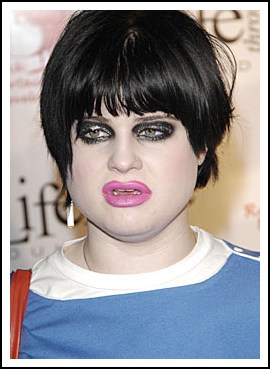
Between Kaki King, Rachel Bilson (?), Dora the Explorer, Enid from Ghostworld, Frida Kahlo, Kelly Osbourne, Ugly Betty, and Marie Osmond I look like a hell of a lot of people. The question then becomes, does this say anything about my identity?

Is looking like a particular celebrity a good thing? Do we like these comparisons? Do these comparisons do anything to our social identity?

I want to say these comparisons don't have anything to do with my identity. This though, is not true. In high school I used to hate the Kelly Osbourne comparison. It didn't happen often, but when it did happen I would get really upset. Who wants to look like Kelly Osbourne? Especially because I was enough of a culture snob to not want to be related to anything about the pop-punk sub culture. I wanted my haircut to be mod and I wanted to relate to the MC5/Velvet Underground scene. (Or at least the 2004 reconstruction of it).

I also think that comparison went a long way in convincing me to not have short hair, and to start working out.

As far as looking like the others, well, I really don't mind it. Maybe I would if there was someone that I predominantly looked like. For the most part, I think more about what that means that the other person made that comparison rather than what it means for me as an individual. For example, the Rachel Bilson comparison makes me think that person is a megafan of the OC, but if I'm told that I look like Enid from Ghostworld, I think that person must be cool because that's a fantastic graphic novel/movie.

Pretty superficial judgement on my part, right? Maybe I do this because no one who knows me really well makes these comparisons.

Anyway, what do you all think? Are any of you compared with celebrities? Do you like it? Do you hate it? Does it damage your social identity?

Our identity is so constructed that adding the connotations of celebrity to it can really change things, even if only abstractly. It's confusing to try and define yourself one way every single day, and then have the perceptions and constructions of a random celebrity placed on top of you. It can change someone's perception of you and limits the possibilities for first impressions. If I'm Kelly Osbourne then I have a bad attitude and really like punk music. If I'm Ugly Betty then I'm really really really sweet and generally a good girl. It changes the outsider's perspective of yourself drastically, when really I just want to be me, no connotations attached. For me, the challenge is the multiplicity of personalities placed upon myself. These things usually fade when someone gets to know me a lot better, but it can really set the tone of a relationship.

To think that all of that comes with having a doppleganger, and the only thing I want out of it is a good Halloween costume—SSS

images:
Kaki King:
http://image.listen.com/img/356x237/9/2/1/6/916129_356x237.jpg

Rachel Bilson:

http://images.teamsugar.com/files/upl0/2/20652/09_2008/RBilBangs.jpg

Tuesday, March 10, 2009

Long Time, New Post

First, I am writing this post sick, under the considerable influence of a UHS prescription that does not allow me to drive, operate heavy machinery, or even really leave my house. (Seriously, I was told not to leave my house while I'm on this).

Have I ever mentioned before in class that I'm sort of "crunchy"? That I'm a vegan, holistic, yoga retreat type. Well, then it's not to much of a stretch to imagine that I'm not much a fan of the doctor's office, or scary prescription drugs. But alas, here I am, on said prescription drugs, blogging away while I wince due to light sensitivity.

And what, pray tell, should I blog about on this rainy Tuesday? I think I'm going to talk about podcasts. Particularly I am going to talk about the Savage Love Cast, which is Dan Savage's weekly podcast.


Who is Dan Savage? He is a sex advice columnist based out of Seattle, with a widely syndicated sex advice column. He has become infamous for redefining the names of scandal ridden politicians (Santorum) and for being an outspoken lgbt rights activist. Locally, you can read it in the Metro Times, which is print every Wednesday. Also, he has appeared several times on This American Life, including the tv episode.

Why is Dan Savage so great? His advice is really frank and honest. Sometimes he's brutally honest, making him very, very funny. I can always expect a laugh when I read his column, which is great, because I'm also getting really good advice. I also like that he takes a strong stance in support of Planned Parenthood, gay marriage, and issues that affect lgbt community. To me, his humor and wit enhances his foundation of logic, making him the perfect champion for his cause.

Below I've posted a video with him debating Tony Perkins on CNN. Tony Perkins is anti-gay marriage and gay rights. Dan Savage is particularly funny when he uses the bible to tear down his arguments.


Dan Savage's podcast is more of the same kind of humorous, solid advice. Besides trying to convince you all why Dan Savage is such a great guy, I also want to share why the podcast is such a product of the New Media. The Savage Love Cast is an example of a New Media podcast for a number of reasons:

1. It is produced exclusively for the web, as in, it never airs on the radio
2. Because of this, the language used is not dictated by FCC rules and regulations
3. The podcast comes in addition to a daily blog (as opposed to just the print column)
4. The podcast is unrehearsed, and is based on calls. This reminds me of the rawness of other aspects of new media, like youtube

These elements are important because while the idea of just listening to someone talk is pretty old media, the circumstances of the podcast are very new media. The only radio program he would be able to make it on would be satellite radio, but in the world of the internet, he can produce content without the downside of FCC regulations, and pre-programming.

I thought I would offer this up as another example of a good podcast. I also like Radio Lab, which has been featured several times on This American Life.

Tuesday, February 10, 2009

Best of the Web, Worst of the Web

For this post I'm going to do something slightly different. I'm going to pick a theme, and my theme is this: local nonprofits and government websites. I'm choosing to evaluate these websites in particular because theoretically they should be the easiest to navigate, with good architecture, content, and simple design. However, in my past life as a researcher and southeast Michigan enthusiast I have found that this is unfortunately not the case.

(above is a screen shot of the Michigan Suburbs Alliance homepage)

I suspect this is mainly a function of the challenges facing city government. i.e. Their resources are scarce, the staff is older (as in the staff doesn't use/care about the internet as much as they should), and existing bureaucracy promotes the attitude that it's simply better to come into the office and get things taken care of there. I'm not saying this is always true, but the majority of small city websites I've visited are not very helpful, and would make my designer friends cringe/offer to fix them pro-bono. That being said, let's check out some websites:

My pick for the best is the Michigan Suburbs Alliance
website. The Suburbs Alliance is a nonprofit based out of Ferndale Michigan that coordinates public policy initiatives among 31 inner ring suburbs in southeast Michigan, in solidarity with the city of Detroit. The content of the website is fantastic and easy to absorb, making local policy challenges seem interesting—something worth getting involved in.

(Below is a screenshot of the City of Hamtramck' s homepage)


The architecture and design of the website support the content. The website looks good, and it has high accessibility,so finding documents, publications, and more information is easy to do. I also like that the website directs you to the right person to e-mail questions to. Need a copy of publication? e-mail Anna. Questions about MMC? e-mail Sharon. This makes it so that people visiting the website that want more information receive effective feedback and want to re-visit the website.

Looking at this website, it's pretty obvious that a lot of time and consideration has gone into the content, architecture, and design. While the Suburbs Alliance is a nonprofit, it's a nonprofit that understands the importance of good design and branding. I think there's a lesson in this: namely, content + architecture + design helps visitors to the website, but also boosts legitimacy. Looking at this website, I already think that the organization must be doing good work since even the website is well-maintained. That being said, let's look at some city websites.

I'm going to pick three, because to me this is a theme for local websites, and not something that can be blamed on just one poorly designed municipal website. Hamtramck, Huntington Woods, and Ferndale. On the surface, the architecture for these websites doesn't look all that bad. However, as soon as you need something specific, like the number for a program coordinator navigation can become a nightmare. That is because there is a disconnect between what the websites want to do, and what they actually do. In reality they are not always functional.

Also, the content doesn't always seem in sync. While the Suburbs Alliance website seemed to have a uniform voice, the content in these municipal websites seems to shift and change, but not in a good way. Finally, the websites suffer from overall poor design. The Hamtramck site, for instance, makes the city look dull and kitschy, whereas in reality Hamtramck is one of the coolest communities in southeast Michigan. i.e. The website is a disservice to the community.

What I hope to have shown from this exercise is that we need to rethink municipal websites so that they can better service the community, and help to positively portray opportunities and programs in said communities. I think this may get better as the older city staff begins to retire and a new generation of workers takes their place (in the next 5-10 years).

Well, that's it for now. Go visit Hamtramck—SSS

P.S. I'm going to be at a writing workshop in NYC this weekend, with staff members from The Nation and Polito coming to teach us writing skills... as in blogging. I'll be sure to report back to the class!

Images:

Screenshot: Michigan Suburbs Alliance webpage
Screenshot:City of Hamtramck Webpage

Monday, February 2, 2009

SSSelebrity

This is me. When I wear these glasses, I've been told I look like Enid from Ghost World.

I really like Ghost World, so generally I welcome the comparison.


Last year for Halloween I was Frida Kahlo. Interesting fact: I've been her for Halloween more than once, and always buy reproductions of her paintings when I go to Mexican town in Detroit.


I don't actually look like her, but no one has ever mistaken my costume for someone else.


This comparison though, was surprising: Last week at the dentist office, the dental hygienist told me that as a child, I looked exactly like a real life "Dora the Explorer". This made me jealous, because I really wish I could speak Spanish, and have a show on PBS.


As I've gotten older though, I've lost the Dora appeal. As a freshman living in East Quad, I was often told I looked like Ugly Betty. This was in part because I constantly walked the halls in sweatpants, stressed out and wearing my glasses.

Not that there's anything wrong with looking like Betty—I think America Ferrara is gorgeous.


During my more portly/punk/looking stupid years in high school, I was told that I highly resembled Kelly Osbourne. This once happened at a MUN conference, to which I replied, so very un-diplomatically, that he could go "fuck himself".


Of course, what I should have done was try to wash out that awful black hair dye.


Last year, the day this photo was taken, my Uncle Leon, who works as a black jack dealer, brought a "lady friend" to our house for Thanksgiving. Said lady friend arrived drunk, and kept repeating that I looked just like Marie Osmond. Best. Thanksgiving. Ever.

Visual Argument Breakdown:

I thought this post was fun to do, since I choose a topic that was personal. In fact, I've always wanted to do a visual comparison between myself and people that I allegedly look like. I think what was hard about making the visual argument was that I felt that I didn't have much control over the order of the pictures—It was post or perish. Also, when I was finding the images, I had to look for ones that had similarities to photos of myself from my i-photo library, which was not always easy to do. Other than that, I really liked using pictures and less text, because I felt that the post was more true to something that I would actually read. To see the original photos of Kelly, Betty, Marie, Dora, Enid, and Frieda click on the links provided.

Monday, January 26, 2009

Blog Post #3: Blog Eval


(To the right is Perez)
To start this blog post, I'm going to stick with what I know, aka, reading perezhilton.com. I read this blog, at least three times every day, and I've done this for at least two years now. In the realm of entertainment/arts blogs, I think that Perez Hilton is unique because he has established himself, and gained credibility, through his blog. In fact, before perezhilton.com, he was just an in debt college graduate with a passion for celebrity gossip.

As for blog conventions, P-Nasty has created his own, which is one of the reasons he is such a force in the blogosphere. The format is simple. There are pictures, usually covered in white scribbles, with some text below them and a link to read further. Sometimes, when the images are really offensive, you have to click a link to read it (especially helpful if you're reading at work). The background is pink. Hot pink. If crayola renamed the color, it would have to be called Perez Hilton pink because the color has become so associated with the website.

To me, this is the only entertainment blog worth reading. After a long day sitting in class, I love to unwind by reading Perez. But, a note on the comments for Perez—they're trite, irrelevant, and thoughtless, but unlike other blogs the nature of the website doesn't make me think anything of it. Ideally they wouldn't be there, but the comments on perez don't bother me as much as comments on say—the free press website, which is a legitimate and widely read news source.


Unlike Perez, the blog "Scholars and Rogues" explores news articles in a more formal fashion, picking out interesting political stories and analyzing them. While the content of this blog is definitely engaging, I thought what was more interesting was the way that the blog had created such a vast blog roll, connecting this blog with many other blogs on the internet.

I also liked the use of a survey on the left side. While the results would obviously not be scientifically sound, the concept is neat and must be fun for regular blog readers and contributors. Perez does this too, and I often vote on the blog (yay irrelevant democracy) but with completely different subject matter, and the comment section of this blog is much better, and clearly defined in the "about" section of the blog.

Overall, I liked this blog much better than the "Hot Air" blog and the Huffington Post, which I find to be visually overwhelming, with headlines that I thought were all kitsch with none of the fun. BUT I will say that the purpose of the blog, which aims to help people use media (and promote their conervative agenda) is a good tool for mobilizing people and helping those that are less tech savvy.


Speaking of tech savvy, the Geek Dad blog via the WIRED website. While this is a blog that I would never typically read, I liked the gimmick and think that it would be a good resource for parents. Like Perez Hilton and Hot Air, and Scholars and Rogues, the blog mixes technology in with the posts to help illustrate the meaning of the entries. (That's Geek Dad on the Right)


Lastly, I looked at the cooking blog "I don't know, what do you want to eat?". I really don't like that there are no pictures on this blog. Maybe I'm just visually oriented, but for me, blogs need pictures. Especially food blogs, because we "eat with our eyes" first. So instead of looking at this blog, I'm redirecting us to the fat free vegan blog, which has pictures and healthy recipes.

I cook a lot, but always vegan, so to me the lack of pictures and meat laden meals on the "I don't know, what do you want to eat?" blog make the blog undesirable both visually and content-wise. On the other hand, the vegan cooking blog is just the kind of blog I like to read and gather inspiration from.

I realize that this point is completely editorialized, but since blogging is personal, I'm going to stick with it.

Thus, I'm coming to the end of my extremely long blog eval entry. I may go back and commit a blogging sin by going back to edit this later. I am too tired right now to think. Will be more coherent tomorrow—SSS


Wednesday, January 21, 2009

Blog Post #2 : Enter Academia


For this post I'm going to be evaluating a the academic blogs A Walk in the Words, art(h)ist'ry, and Bug Girl's blog.

A Walk in the Words uses a pretty somber look to it. The blue on blue template, while not necessarily a poor design, is definitely not very visually intriguing. While normally I would say this is a major fault of the blog, perhaps a blog that centers its main focus around grammar and linguistics should be text based, and steer away from really visually stimulating images in the foreground. While I'll maintain that the blog may look somewhat boring, the links on the right side of the page are helpful, and I did like the use of images within to post to add a little flair to the entry.

I feel that she establishes credibility by... maintaining a well thought out blog? There are some elements of the blog that link, and directly respond to other language based posts, which is a way of creating credibility. I also think that she has established a tone and voice that shows that she has some authority on the subject matter. Plus, the use of diagrams, and the general language, makes it seem accessible and easy to read in spite of the subject matter.

Overall, I think that this blog works well and keeps up with its academic content aka it's a good example of an academic blog.

I really like the art(h)ist'ry blog! I think that it has a good design, it's simple, but the light color palette is a perfect compliment to the art that is featured on the blog. While the background is very simple, this makes it so that the photos on the blog shine.

I think credibility is established within the context of this blog by the way the author uses other articles and texts and synthesizes them with their own assertions and associations. While I don't have any academic background in art history, I found the information on this blog insightful and I found myself linking it to a few of my friends and bookmarking it. Perhaps then, this can be an element of credibility: if a blog can maintain an academic tone, but still be accessible to a wider audience, then maybe this helps to establish credibility. Either way, art(h)ist'ry is awesome.

The last blog I looked at was Bug Girl's blog. I am not a fan. Design wise, I did not like the way that the blog scrawled along the page, nor did I like green on white type that seemed so squished on the margins. This is just a personal opinion, but I immediately thought it was cluttered and not as engaging as the other two blogs I looked at.

Also, I did not like the comments placed over the pictures. I think maybe this has a lot to do with what I perceive an academic blog to be, but I thought that the photos took away from any academic credibility the blog might have had. In fact, while I can tell that some of the text is very credible, the "images overwhelm me" and make the text seem like a moot point.

So, while I thought that A Walk in the Words and art(hist'ry) did a good job with design and credibility, I felt that Bug Girl's blog fails. That's it for now, signing off— SSS


Monday, January 19, 2009

Blogging: It's Personal


Between reading and watching Sullivan, class discussion, and the Economist I have had blog on the brain for an entire week!

I found Sullivan's article about his blog to be insightful. The reasons why he started his own website, and then blog, are for the same reasons that most people start their own personal blogs. This is self evident after reading the Economist article "It's the Links, stupid" which illustrates just how many people are blogging these days, including myself. While I have never think of myself as being particularly tech-savvy, the article did remind me that my teenage adventures into the world of Teen Open Diary, and then later,livejournal, were all a form of blogging. Though, unlike Sullivan I never had wide-spread circulation through out the internet, and instead limited my posts to a very small community of friends.

This, according to the Dunbar Number in "It's the Links, Stupid" would make me a very normal blogger/lj user as the "
average number of readers is seven," about what I had back in high school (the same year the article was published). In the video "Your Brain on Blog" Andrew Sullivan seems to have the opposite problem, speaking candidly of readers reactions to him not posting on a regular basis and his efforts to constantly post on his blog. I really liked the anecdote of himpre -programming posts so that he could go out to lunch. And, as far as I can tell, that's consistent with other prominent bloggers. For example, when Perez Hilton visited the Martha Stewart show he said that he posted between 60-70 items daily, more than a hard days work!

After reading these accounts of blogging, part of me feels like a blog addict—one of those people that Sullivan says constantly need new blog posts. As a blog reader, once I find a blog I like I refresh it at least a few times a day. However, the flip side of that is that the author becomes empowered by the blog. And, while this is the exception and not the rule, successful blogs can garner advertisements that can turn journalists into professional bloggers.

Plus, I liked Sullivan's concept of the blog as a new kind of text that creates a genuine moment frozen in time and history. Also, as someone who has blogged before, I can relate to his feeling a support network around him, from friends and family that comment on his blog. However, my one critique of his article is that I do not think that comments on blogs are always constructive or necessarily participatory, but can instead (and I would argue in many instances) be extremely destructive and non-participatory, meaning that while someone may be commenting on the article, usually they are responding to its stupidity, or the stupidity of another person commenting. In the last issue of Bitch magazine, this concept is explored in the article "The lowest Comment Denominator" which explores the advent of web commenting. Examples of this type of thoughtless, destructive criticism can be viewed on just about any website, fromperezhilton .com to the online version of the New York Times, meaning that this phenomena is not just confined to gossip blogs, but infects theinternet as a whole.

Thus, while Sullivan argues that blog posts are in-the-moment, and that's what makes them valuable, I would argue that to a certain extent that is what also makes them, and theircommenters , not valuable at all. Because there are so many posts, and an exponential number of comments to go with these posts, the dialogue created is often not meaningful or thought provoking, but rather filled with people proclaiming they're "first" or something written "is stupid". In this way, while blogs have their place as a new kind of text, they are not necessarily superior than more traditional types of media.

That being said, the articles and the video have made me think about blogging a lot, and as I begin to blog more, I'm sure I'll find out more (and maybe relate to the articles more). Until then, I'm signing off - SSS

First link, First Image


This may just be my favorite radio show/ podcast of all time.
This American Life